Steroid Science Home

Category

Molecular Pharmacology

20 articles

Old Molecules, Enduring Dominance: Why the Steroid Compounds of Mid-Century Medicine Still Define the Standard of Care

Old Molecules, Enduring Dominance: Why the Steroid Compounds of Mid-Century Medicine Still Define the Standard of Care

Despite decades of intensive pharmaceutical investment, the steroid formulations developed between the 1950s and 1970s continue to represent the therapeutic benchmark across numerous clinical indications. This examination explores the biochemical, economic, and regulatory forces that have paradoxically elevated aging molecular designs above their modern successors. Understanding why innovation has so consistently failed to displace these compounds reveals something fundamental about the relation

The End of the Novel Molecule: How Delivery Engineering Became Steroid Pharmacology's Most Productive Frontier

The End of the Novel Molecule: How Delivery Engineering Became Steroid Pharmacology's Most Productive Frontier

For decades, pharmaceutical chemists pursued the ideal steroid molecule—one that would bind only the right receptors, in only the right tissues, without collateral biochemical damage. That pursuit has largely been set aside. The most consequential advances in steroid therapeutics today are not emerging from synthetic chemistry laboratories but from formulation science, nanotechnology, and targeted delivery engineering.

When the Evidence Moves Faster Than the Guidelines: The Persistent Disconnect Between Steroid Research and Clinical Practice

When the Evidence Moves Faster Than the Guidelines: The Persistent Disconnect Between Steroid Research and Clinical Practice

Laboratory findings on steroid efficacy and safety have advanced considerably beyond the dosing protocols enshrined in many official clinical guidelines. This article examines the structural, regulatory, and institutional forces that allow outdated recommendations to persist — and what that gap costs patients navigating complex steroid-dependent conditions.

Chasing the Perfect Molecule: Why Decades of Steroid Innovation Keep Running Into the Same Biological Wall

Chasing the Perfect Molecule: Why Decades of Steroid Innovation Keep Running Into the Same Biological Wall

Despite remarkable advances in synthetic chemistry, newer steroid compounds consistently fail to deliver the dramatic clinical improvements that laboratory benchmarks seem to promise. The reasons lie not in the chemistry itself, but in the biological architecture that receives these molecules — an architecture governed by receptor saturation thresholds, genetic heterogeneity, and evolutionary constraints that no structural modification has yet overcome. Understanding why efficacy plateaus is as

When Abundance Becomes Obstacle: The Receptor Downregulation That Undermines Long-Term Steroid Therapy

When Abundance Becomes Obstacle: The Receptor Downregulation That Undermines Long-Term Steroid Therapy

Sustained steroid exposure triggers an adaptive cellular response that systematically reduces receptor availability, eroding therapeutic effectiveness even when drug concentrations remain clinically adequate. Understanding the molecular timeline of receptor downregulation is essential for clinicians designing protocols intended to preserve efficacy over weeks or months. This article examines the biochemical mechanisms behind steroid tachyphylaxis and the strategies emerging to counteract it.

Storm Before the Calm: Unpacking the Biphasic Response That Makes High-Dose Prednisone Feel Like the Wrong Medicine

Storm Before the Calm: Unpacking the Biphasic Response That Makes High-Dose Prednisone Feel Like the Wrong Medicine

Clinicians initiating high-dose prednisone therapy frequently encounter a puzzling phenomenon: patients report intensified symptoms within the first 48 to 72 hours, precisely when the drug should be working. Understanding the molecular architecture of this biphasic response is essential for managing patient expectations and preventing premature discontinuation of a potentially life-saving therapy.

Built to Fail: The Cellular Complexity That Defeats Every Attempt at a Perfect Steroid

Built to Fail: The Cellular Complexity That Defeats Every Attempt at a Perfect Steroid

Decades of pharmaceutical investment have yet to produce a steroid compound that achieves complete receptor specificity without generating unintended biological consequences. The cellular microenvironment introduces layers of molecular complexity that no computational model has fully anticipated. Understanding why the 'perfect' steroid remains elusive reveals as much about the limits of drug design as it does about the extraordinary sophistication of steroid biochemistry.

Unintended Tenants: The Science of How Steroids Colonize Off-Target Tissues Through Receptor Cross-Reactivity

Unintended Tenants: The Science of How Steroids Colonize Off-Target Tissues Through Receptor Cross-Reactivity

When a steroid compound enters systemic circulation, it does not confine its activity to the tissue a clinician intended to treat. This article examines the biochemical architecture of receptor cross-reactivity, exploring how structural similarities across the nuclear receptor superfamily allow glucocorticoids, androgens, and mineralocorticoids to bind unintended targets—and why this molecular promiscuity underlies some of medicine's most persistent therapeutic complications.

Clean in the Lab, Chaotic in the Clinic: Why Steroid Selectivity Breaks Down Inside Living Patients

Clean in the Lab, Chaotic in the Clinic: Why Steroid Selectivity Breaks Down Inside Living Patients

Engineered steroid compounds routinely demonstrate elegant receptor selectivity under controlled laboratory conditions, yet those same molecules frequently produce confounding off-target effects once they enter the complexity of a living human body. The gap between in vitro pharmacology and real-world clinical outcomes is not a minor footnote — it is one of the most consequential challenges in steroid medicine. Understanding why selectivity unravels requires a deep examination of tissue distribu

After the Transformation: How Steroid Metabolites Rewrite the Pharmacological Story

After the Transformation: How Steroid Metabolites Rewrite the Pharmacological Story

The pharmacological profile of a steroid compound does not end with the parent molecule—it often begins there. Active metabolites generated during hepatic and peripheral biotransformation can bind entirely different receptors, penetrate distinct tissue compartments, and produce physiological consequences that the original compound never could. Understanding this second-order chemistry is essential to predicting clinical outcomes, side effects, and therapeutic opportunities.

One Carbon, Profound Consequences: The Biochemical Power of Steroid Methylation

One Carbon, Profound Consequences: The Biochemical Power of Steroid Methylation

The addition of a single methyl group to a steroid molecule may appear trivial at the structural level, yet its pharmacological consequences are anything but minor. Methylation can determine whether a steroid survives hepatic processing, how strongly it binds to its target receptor, and what adverse effects a patient may ultimately experience. Understanding the chemistry behind this one-carbon modification is essential to appreciating how modern steroid therapeutics are designed and prescribed.

Rehabilitating the Molecule: The Clinical Science Reclaiming Anabolic Steroids as Legitimate Therapeutic Agents

Rehabilitating the Molecule: The Clinical Science Reclaiming Anabolic Steroids as Legitimate Therapeutic Agents

Decades of association with athletic doping have obscured a substantial and growing body of clinical evidence supporting the therapeutic use of anabolic androgenic steroids in oncology, burn medicine, hormone replacement, and age-related muscle loss. This article examines the pharmacological science behind specific approved and investigational compounds, the regulatory landscape governing their use, and the institutional stigma that continues to complicate their deployment in precision medicine.

Receptor Saturation and the Ceiling Effect: Why More Steroid Doesn't Always Mean More Response

Receptor Saturation and the Ceiling Effect: Why More Steroid Doesn't Always Mean More Response

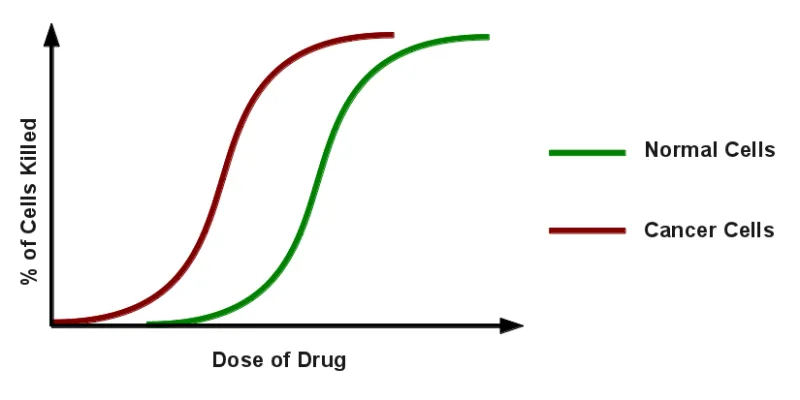
The assumption that increasing a steroid dose will proportionally amplify its biological effect is one of the most persistent misconceptions in both clinical and lay understanding of steroid pharmacology. Dose-response curves reveal a far more nuanced reality—one governed by receptor saturation, threshold kinetics, and diminishing returns. Understanding this non-linearity is essential for both safe clinical practice and accurate interpretation of steroid research.

Molecular Brake Pads: How Glucocorticoids Shut Down the Inflammatory Cascade

Glucocorticoids are among the most prescribed anti-inflammatory agents in modern medicine, yet the molecular choreography behind their immune-suppressing effects remains underappreciated outside specialist circles. By binding to intracellular receptors and reprogramming gene transcription, these steroid compounds execute a precise and far-reaching dampening of the body's inflammatory machinery. Understanding this mechanism illuminates both the therapeutic power and the unavoidable biological tra

One Enzyme, Opposite Outcomes: How the Liver Transforms Steroids Into Something Entirely Different

The liver's cytochrome P450 enzyme network does not simply degrade steroids—it actively reshapes them, sometimes amplifying their potency and sometimes rendering them inert. Understanding how genetic variation in enzymes like CYP3A4 produces divergent physiological responses to identical doses is one of the most consequential puzzles in steroid pharmacology. This article unpacks the biochemical logic behind first-pass metabolism and its profound implications for personalized medicine.

Selectivity Over Potency: How the Anabolic-Androgenic Ratio Defines Steroid Behavior at the Receptor Level

Selectivity Over Potency: How the Anabolic-Androgenic Ratio Defines Steroid Behavior at the Receptor Level

The anabolic-androgenic ratio is one of the most cited — and most frequently misunderstood — concepts in steroid pharmacology. Far from a simple numerical ranking, this ratio encodes critical information about how a steroid compound interacts with specific receptor populations at the molecular level. This technical analysis unpacks the structural chemistry and receptor biology that determine whether a steroid compound primarily builds tissue, drives androgen-dependent signaling, or modulates inf